Monday, 10 September 2012

No More Parties?! Part 1


A year ago, I asked my wise friends of Facebook the question: ‘What do you think of politics today?’ I gave the options ‘like’, ‘don’t like’, ‘don’t know enough about it’ and ‘don’t care’ but left it open for others to add their own categories. The reason I asked is because I love politics. It is important to me because it has an effect on my life. 37 replied.

Results were: 13 – ‘don’t like’, 10 – ‘no major distinction between major parties anymore – vote grabbing whores all’, 4 – ‘occasionally interested’, 3 – ‘that’s a deeply vague question’, 3 – ‘I like turtles’, 1 – ‘I’d rather not vote than vote for Rupert Murdoch’, 1 – ‘don’t know enough about it’, 1 – ‘don’t care’, 0 – like.

So this was a pretty rubbish sample of vaguely young people. Both boys and girls answered and many were happy to add alternatives. It appears that most people consider themselves to have enough understanding to know that they don’t approve. Not one said ‘like’.

The political parties are back in the Commons after their summer break. The only profession, aside from teachers and children, that gets such a long period off. And certainly the only one that doesn’t get any stick for it. I’m not saying that it doesn’t make sense to rest people in high-pressure roles where they often work long hours. But the same gesture isn’t afforded to everyone else doing such jobs.

While they are papped by the media allegedly relaxing on their staycation, many can actually be found surrounded by SPADs (Special Advisers, roles populated by Oxbridgers in the ministers’ own image) preparing for the new term. No sooner have they got their well-cut suit jackets off (except for the ones who got bollocked by a female Conservative MP the other day for looking scruffy), there’s been a re-shuffle in the Cabinet. And party conference season is just around the corner – more on that later.

A ‘reshuffle’ sounds alarmingly casual. Like the first line-up was an initial, random shuffle and this subsequent one is similarly haphazard. Commentators are wondering how Big D has managed to miss the fact that George Osbourne is the most hated man in England (booed in the stadium when he was presenting medals to Paralympic winners, when even Gordon ‘End of Boom and Bust’ Brown got a cheer), his new Minister for Equality has been absent or abstained in all major LGBT rights votes and his new Health Minister (the one who ballsed up a huge media deal with Rupert Murdoch by being… too good friends with him) is sometimes referred to accidentally on the BBC as Jeremy Cunt. And he has no health expertise. And he has been reprimanded on both expenses and tax avoidance.

Oh and not to mention Lib Dem David Laws making his big comeback, painted as being just about the only competent one, despite leaving his ministerial post in 2010 after it was revealed he claimed money from the taxpayer for a room in his partner’s flat; which doesn’t give you much confidence in the rest of them. Overall, it reveals a healthily bizarre pattern to making high power appointments.

So, with that bit of hocus pocus out of the way, the parties can all continue with preparations for their big annual shindigs, starting with the Green’s last weekend. Party conference season is a bit like summer for teenage festival-goers. Get wasted. See people you know. Potentially hook up. Perhaps learn something. If you wondered where political parties decide their policy – it’s not here. They don’t really recruit members either… So, why then you ask, do they exist? I went to a debate last week for the launch of Policy Review TV with @PollyToynbee from the Guardian arguing for them to be abolished, and @TimMontgomerie, editor of Conservative Home, saying they should remain.

I’ll spare you the details and just give you a couple of tit-bits. Polly called them an “extraordinarily artificial event where delegates are irrelevant.” Tim said they are a ‘Disneyland vacation’ for politics lovers. He said there are actually three conferences:

1. TV conference – for the cameras. Main aim – DO NOT MAKE A GAFF ON TELLY
2. Fringe conference – events outside the main hall where charities and thinktanks can be found
3. Late night bar conference – the only socialising lots of politicos ever get to do

Many limitations were identified with the help of the crowd. People suggested the length was prohibitive to those who have… er… jobs. Conservative Home actually worked out that its conference now costs more than £700 to attend. Much more than a festival and not in the summer holidays… Hmm.

Political parties are in massive decline. This is happening for many reasons, here’s a few: they don’t represent the views of modern people, they have bad internal organisation so they find it difficult to get people and biscuits in the same room, they don’t want too many people coming with their individual ideas and views, the situation in government has stayed stable whether they have members or not, they aren’t cool, they don’t seem to do what they say they are going to do, they don’t tell the truth… I could clearly go on.

::

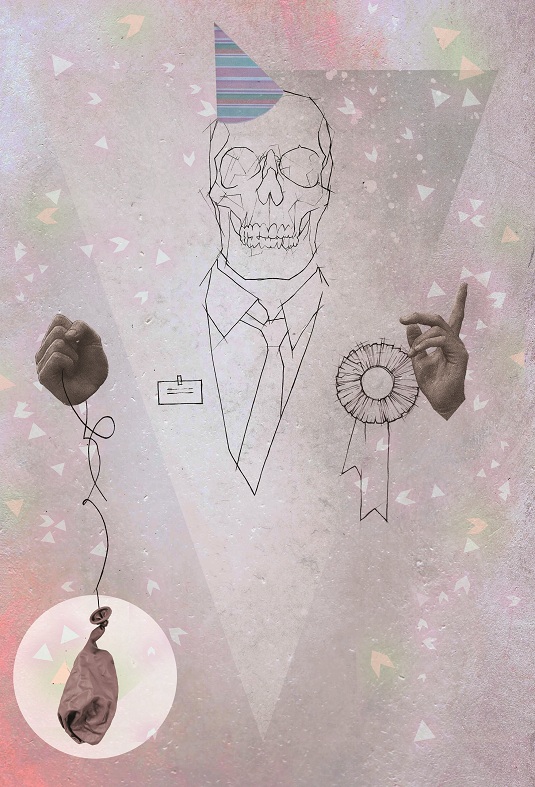
Illustration by my lovely friend Hannah Wallace.

Written for and first published here: http://www.letsbebrief.co.uk/no-more-parties/

Friday, 31 August 2012

A quick intro to... Me! At my new political comment home Let's Be Brief


Meet Kirsty Styles a digital journalist and youth activist. A proud Warringtonian, along with Kerry Katona, she is also an enthusiastic dodge ball player and (very) amateur comedian.

Kirsty has worked as a media campaigner for Oxfam and as a freelance journalist for local, national and specialist organisations, including The Observer, RockFM and the Sunday Mirror. In a brush with the dark side, or something of an undercover project, she has also worked in advertising.

Bringing a bit of street smarts and good old common sense to the world of political thought, Kirsty is an elected youth member of the left-wing think tank Compass. Passionate about social issues last year, Kirsty put herself in the thick of it and appeared on a BBC documentary about youth unemployment, which was screened on BBC3, and also featured on Radio1.

And oh, she hates being told that change isn’t possible.

See the original post here: http://www.letsbebrief.co.uk/a-quick-intro-to-new-lbber-kirsty-styles/

Tuesday, 21 August 2012

#Notpartof2012? How about Rio 2016?

Written for and first published at: http://www.letsbebrief.co.uk/notpartof2012-how-about-rio-2016/

Admit it. The cries of “Yes Jess!”, the shouts of “Go Mo” and the summer anthem ‘Gold on the Ceiling’ left you wanting more. I spent Super Saturday watching the big screen in Haggerston Park and I was carried away. We started talking about us as ‘we’, despite some of our deepest troubles being laid bare here just a year ago.

For an event that could have spiralled into the LOL-ympics, London 2012 has left an Olympic-shaped hole in the Universe. It took me some time to appreciate that this was not an event about fizzy drinks and fast food, weary with all of the pre-event advertising.

So this was actually about sport – about dedication and commitment – a call to arms. After ‘My Generation’ by The Who closed the celebration, Jaque Roggue, Head of the IOC said: “I call on the youth of the world to gather in Rio in four years’ time from now and celebrate the 31st Olympiad.”
Participation in sport among 16-24-year-olds in the UK is low and falling. It appears that in the upheaval between full-time study, job hunting and work, we stop taking part. For all our preoccupations with looking good, we abdicate the one activity that will help us stay trim and impress potential mates. The charity softball league I play for has produced six marriages.

But it was our Conservative government, who mock the alleged ‘prizes for all’ ethos of state schools and expanding waistlines, which scrapped our measly two hours of compulsory sport. Poet Laureate, Carol Ann Duffy, wrote an Olympic verse asking for school playing fields back, sold off to property developers, for every medal won. All of this government policy means that 60% of school children no longer play any competitive sport.

It was actually a hurdler that went to Eton who nearly didn’t make it to London 2012 because he was pushed towards academia as he was leaping over desks. Perhaps there is a leotarded gymnast in George Osbourne? And it was Yorkshire, in the relatively deprived northeast, which added 12 medals, proving that sport changes the lives of ordinary people. However, a third of the medallists went to private school, despite making up just 7% of the population.

A Guardian/ICM poll has found that support for the Olympic legacy is strongest amongst under 35s, who see hope for the future and the chance of a better world. Though the BBC declared Usain Bolt’s potential retirement as the ‘end of athletics’, this is the beginning for a generation inspired by the achievements of those 17 days.

There are 1400 days to Rio, and many winners in 2012 who ‘just picked up’ a sport. Samantha Murray, winner of the modern Pentathalon, said: “I’m just a normal girl”. The money that camera-friendly Olympians make from advertising cosmetics, fashion and cereals is an uncomfortable reality; or another perk of the job?

David Cameron was on the BBC sofa on Sunday pledging the same support for elite athletes going to Rio 2016 as there was for London. But how do you get up to that level in the first place? And what happens after that?

Jade Jones, gold medallist in Taekwondo, thanked her family and friends who fundraised so she could compete, which could become the norm as government money is shared thinly around. It might be this investment by communities that boosts us to further success, or perhaps Team GB volunteers will lead us into a community renaissance? Should schools coordinate this effort, if so, how do we get children, teachers, parents, politicians and sports enthusiasts involved? We should take the idea of the Big Society and stick it to them. Why do we let the rich be in charge – they are already powerful – how can they be expected to really have our interests at heart?

This is a 20-year job. And that means a little investment from you, us. You might not be the next Mo Farrah, but you might be the person who inspires the person who is. The reality of the volunteering effort is that more than 1 million young people still need jobs. We can’t be expected to endlessly work unpaid.

There were more cringe-worthy moments of course (George Michael in the closing ceremony), questionable commentary (“So how do you feel [about letting us down by not winning gold]?” said to sweaty and elated participants) and the heavy back patting at crisis well-averted. Bolt promised he would be back in the UK ‘when the tax laws change’, a powerful kick in the face for us, whose taxes made a huge contribution to the Games.

A charity has been set-up ‘Join in Sport UK’ with events starting this weekend. Sport is fun, try your best. Time will tell whether success was borne from a cynical need to look good, the Labour project that the Conservatives could have done without, and not a long-term commitment.
That’s all from me on this. Don’t forget we have the Paralympics still to come.

As Lord Coe said in his final speech to the crowd: “When the time came, Britain, we did it right.”

Yes Sir, just about…

Friday, 3 August 2012

#Notpartof2012: Part 2

Written for and first published at: http://www.letsbebrief.co.uk/week-2-notpartof2012/

So it’s the end of week 1 of the London 2012 Olympic Games (a banned syntactic arrangement from the list issued by organisers), and it’s now clear to me that Olympics is quite an annoying word to write again and again. That aside, unless you are on holiday avoiding it, there is an unmistakable air of the Olympics in London town. Like it or not, CBeebies and BBC Parliament have made way for wall-to-wall coverage of the greatest show on earth. Despite having no tickets, my bike, TV and my residence in East London have ensured that the events are very much inescapable.

Given that you can see the stadium from my house, last Friday raised a dilemma – to party, or not to party? Hearing that there were big screens in Victoria Park down the road, and with helicopters flying worryingly low overhead, the journalist in me decided to pick up a few beers and head down to take my place among the great unwashed for the opening ceremony.

Strike 1. Gated area, ticket-holders only, and leave your booze at the door.

Thousands of others had heard news of a massive communal telly-watching opportunity, but what we didn’t know was that while the event was free (unlike Hyde Park, where audience members paid £60), they were only letting 5,000 people in on the door. Ticket-holders only. Hmpfh. As a miscellaneous urban voice addressed the crowd behind the metal fence, the rest of the park, and the huge queue, were cast out into darkness. At least we still had our booze…

The following morning, I dragged my bigger half to an anti-Olympics protest which promised to bring together more than 40 groups, including Occupy London and War on Want. It was a bit late to argue with the whole thing, as they’d already done the launch party, but I was interested nonetheless.

The beardy weirdies were out in force, flanked by Socialist Workers and quite a lot of the world’s media, including Channel 4. A stroke of genius by someone, somewhere, had led to the creation of a printable t-shirt stencil that read ‘official Olympic protester’, which looked strikingly similar to the actual Games logo. Which does say 2012, if you hadn’t deciphered it.

While a non-corporatised and non-militarised Olympics sounded like just what I was after, I wasn’t sure the kids of the ALARM anarchist group, who assured me that I ‘didn’t get it’, when I suggested that there were different types of freedom, were the people to deliver it.

Strike 2. Get Ahead of the Games… Wait…

We’ve been warned to stay off the tube for what feels like forever, fearing even bigger crowds than we’ve grown begrudgingly accustomed to. Apparently, that PR message was received a lot more clearly than the one that said ‘don’t get North and South Korea mixed up, they really hate that’. Hotel rooms next to Hyde Park that were £500 a night are now going for less than £100, shops and museums say visitors are down 30% on last year, traffic has reduced by a fifth.

Small businesses, like my local pub, where the landlady told me she’d had the worst day in living memory this week, have been left out in the Olympic advertising wilderness as the big brands, who only put in 2% of the £9.3 billion budget, were given 100% share of voice. I cycled past a pub that had avoided any mention of the Games by chalking a crude, but understandable, podium on the board outside. That’s one for the underdog. I also saw two boys brandishing Visa signs, with no discernible point, other than for people to see them. We own 85% of RBS and we don’t command the same power over what it says and does. If we did, those ‘ISA, ISA baby’ ads would never have seen the light of day…

Strike 3. LOCOG makes even more money on tickets.

I’ve been waiting patiently for a knock at my door by a purple-shirted volunteer asking me to fill up an empty seat; asking anyone, as one does when hosting a party, to give the illusion of popularity. You can’t argue with soldiers (unless you are married to one, I’m sure!) getting tickets. But I do know that I barely remember being a child…

In true Olympic spirit (or just for a laugh), I’ve been wapping out the Games buzzwords to see how far it gets me. So far, it’s 1-1. ‘Get Ahead of the Games’ appeared to help when I asked a wandering PCSO if I could ride in the Olympic Lane rather the angry queue of normal traffic. He advised me to ride on the pavement. ‘Get Behind the Games’ did not work on G4S workers at Haggerston Park, who clearly weren’t strict process followers in their civilian lives, but were keen on the ‘process’ of me walking to an entrance at the other end of the park (visible from where we were standing), as bikes were not allowed in the one they were covering. Ughhhh.

Loving
- The weird sports no one knew anyone was practising
- Men owning gymnastics and women playing excellent football

Hating
- Medal envy – ignorance of silver, bronze, or even qualifying, as demonstrating significant investment of time and effort
- Not letting the Chinese have their moment – are we just worried that this the first Post-US Games?

Wednesday, 25 July 2012

#Notpartof2012: Part 1


Written for and first published at: http://www.letsbebrief.co.uk/notpartof2012/

There is nothing like being made to feel like a party pooper to stop people from raising genuine concerns.

‘Get Behind the Games’ has become the mantra of public figures and politicians keen to jolly up all those who just don’t seem to be able to see past the G4S security fiasco, or that the biggest global celebration of health and amazing ability has descended tiring and predictably into an event for the highest bidder. Given that tickets are going on the black market for £100,000 for the 100 metre final, how can I, we, really be involved?

On Any Questions on Radio 4 last weekend, former chancellor Norman Lamont said that the proposed Public and Commercial Services (PCS) union strike this week was “doing damage to our reputation”, and was timed to cause “maximum embarrassment while the world is watching”.

Well, yes.

The strike by frontline staff at the Home Office, including in the Border Agency, the Identity and Passport Service and the Criminal Records Bureau, against 5,000 job losses was called off with just days to go to the Olympics. The government claimed irregularities with the ballot. The union has said that they have been promised that more than 1,000 new jobs will be created. Nothing like a clear cut end to a disagreement…

I wasn’t sure whether the action was a good idea. It would make a big impact, certainly, and really highlight the need to keep the jobs that are now on the line, but the media coverage would have been unbearable. Any sense of the reason would be drowned out by front-page pictures of visitors queuing, babies in Wenlock suits with their lower lip out, to have their passports checked.

But really, we have known that we would be hosting the games for seven years. The Government has had two years in office with this knowledge. Why did they only find out two weeks beforehand that G4S wouldn’t be able to fulfil its commitment to provide security staff? How wasn’t security -sad world that we have created for ourselves in what should be a time of worldwide solidarity – top of someone’s list?

We knew that the eyes of the world would be on us, and it seems we buckled under the pressure.

If the world got the impression that workers are unhappy, jobs are being cut and private sector contracts aren’t improving standards, then they would be right. The media cannot report what doesn’t happen. They can only find bad news if something has gone wrong.

I want to support our Olympians and Paralympians to do things that I could never do. But I think we are all just as sick of the tales of incompetence as we are of finding out how brands are going to help us pick up our must-have Games souvenirs.

If more time had been spent managing projects, thinking about how to deliver something that we could all be truly part of and proud of, not scrabbling for the cheapest option in our race to the bottom, or worrying about the perception of the work, the whole project would have been seen as more successful.

Perhaps we, the people, can take this historic moment of competition to appreciate the one thing that makes us all the same. We are #notpartof2012, we are the Olympic Fringe. We have a mass communication tool at our fingertips, the largest collective in human history, and no doubt lots of lovely people with fun, and free ideas. We could do anything. Edinburgh ain’t seen nothing yet.

Why let the machine of the state take food to our mouths if we can do it, and feel good about doing things ourselves? This is ours, Britain, our Games. Let’s find some way to make it feel more like that.

I am #notpartof2012. How about you?