3 has reported a record £1bn revenue for the first half of 2013, with operating profit more than tripling from the same period last year, up to £86m from £26m.
The company has added 697,000 customers during this time – 168,000 of them in Q2, 2013 – with many opting for the operator's all-you-can-eat 3G contracts.
Revenue from calls, texts and data reported in the company’s H1 earnings remained flat at £667m – despite CEO David Dyson revealing in June that data usage per person had increased from 1.1GB to 1.8GB every month - but handset revenue increased 30 per cent to £321m in H1.
In a bid to offer greater transparency, 3 has changed the way it measures its customer base, for the first time counting only active accounts used in the last 90 days, of which there are 7.5m, as opposed to the number of people registered with the company in total. This might give the impression that the operator has lost 1.7m customers since it reported Q1 results in March – but these are likely to be prepaid customers who are no longer using their SIM.
Going 4G
The UK’s newest mobile operator, which struggled from 2003 until 2010 to turn a profit, will be shifting its attention to using 4G spectrum allocation by the end of this year. “We’re on track to launch in Q4 and we will offer 4G at no extra charge,” said Guy Middleton, head of corporate communications at 3. “When we switch on our 4G network well over a million of our customers will already have a 4G device, so they will get automatic and hassle-free access in 4G areas without the need to change plans or SIM cards. Everyone on 3 with a 4G device will be able to enjoy our 4G services as we roll out the network across the country to add capacity to what is already the UK’s fastest 3G network.”
The company says its dual carrier 3G network is already 100 times faster than it was when it launched in the UK and claims that its customers might already see speeds in excess of 20MBps. Ofcom considers speeds above 6MBps as a 4G experience. 3’s CEO stated in June that the operator is looking to ensure it has enough capacity rather than headline speeds when its 4G service goes live.
Written for Mobile Marketing Magazine and published here: http://www.mobilemarketingmagazine.com/content/3-go-4g-q4#1QMoJgblFZDXKdkl.99
Friday, 2 August 2013

Thursday, 1 August 2013
Sun Erects Digital Paywall
The Sun’s digital content is now behind a paywall, costing subscribers £2 per week after a trial period of two months’ access for just £1.
The Sun’s website – which isn't optimised for mobile browsers – along with its apps can now only be accessed by paying subscribers. A spokesperson confirmed that the company’s apps will still offer ad placements to advertisers looking to reach its audience behind the paywall.
The digital package can be accessed on iPhone 4 plus or Android handests running version 2.3 and above, but Sun+Goals football content and Sun+Perks offers require iOS6 or Android 4.3 to work.
Print readers can also be part of the fun if they collect 20 unique codes from the newspaper, which will grant them a month’s access to Sun+ across desktop, mobile and tablet.
Written for Mobile Marketing Magazine and published here: http://www.mobilemarketingmagazine.com/content/sun-erects-digital-paywall#SUZEfG5tDrSpumdJ.99
O2 4G Switch On 29 August
O2 has announced its 4G switch on date, with London, Leeds and Bradford the first cities to be covered when the service launches on 29 August. Having spent nearly a full year becoming increasingly overcome with fatEEgue, O2’s announcement could not come a moment too soon.
But it is clear that the second operator to go live with superfast broadband has a lot of catching up to do – EE has already signed up 500,000 customers and its network covers 55 per cent of the population. After launch, O2 has promised 10 more cities by the end of the year: Birmingham, Newcastle, Glasgow, Liverpool, Nottingham, Leicester, Coventry, Sheffield, Manchester and Edinburgh.
Although O2 has announced plans to match EE’s commitment to reach 98 per cent of the population - and has highlighted that its valuable 800MHz frequency will ensure the service works ‘both indoor and outdoor’ - the company has not yet ventured a deadline for this. EE has pledged to reach 98 per cent of people by the end of 2014, and owns 36 per cent of the country's total 4G spectrum compared to O2's 15 per cent.
Tariffs will start at £26 per month – most likely a SIM-only, 500MB-data option akin to the £23 option EE introduced in May - with pay-as-you-go and business packages on the way. EE already has 2,000 UK businesses, including the likes of Renault and Ikea, on its books.
In a clear drive to differentiate itself, O2 has announced a mystery live launch performance at the Shepherd’s Bush Empire to coincide with the switch on, with early-bird ticketing on offer for its Priority Moments customers. 4G customers will also be able to get a free, year-long music package when they sign up direct with O2.
O2 says it spent £550m to secure one of the highest proportions of the lowest frequency spectrum as it travels further and can move better through solid objects. Data usage by its 22.9m existing UK customers has already more than doubled in the last twelve months, the company said. EE, which formed in 2010 from Orange and T-Mobile, revealed it has 27.5m customers in its last earnings call.
Written for Mobile Marketing Magazine and published here: http://www.mobilemarketingmagazine.com/content/o2-4g-switch-29-august#bOOEGeCZ8ujVtR4b.99
Wednesday, 17 July 2013
Analysis: Yahoo's Q2 Results and Mayer's First Year as CEO
Yahoo’s Q2 earnings call is something of a judgement on Marissa Mayer’s first 12 months in the job - as she took over as CEO almost exactly a year ago – but the mixed picture shows that much of the hard work is still to be done.
GAAP revenue stood at $1.14bn (£750m), a seven per cent decrease on a year ago, but on a brighter note, profits increased by 46 per cent to $331m, largely as a result of Yahoo's investment in Chinese eCommerce site, Alibaba. If you take revenues minus traffic acquisition costs (the money internet companies pay out to affiliates and other third parties who drive traffic to their sites), revenues are down just 1 per cent from $1.08bn to $1.07bn, and remain flat from the previous quarter. Yahoo's display revenue was $472m, a 12 per cent decrease compared to a year ago, and search was down nine per cent to $418m.
Reacting to the results, Karsten Weide, IDC's program VP of digital media and entertainment, told Mobile Marketing: "Yahoo's stock price has gone up by 70 per cent since Marissa Mayer took over, and that has made a lot of people happy. However, most of that growth was due the perceived value of Yahoo's stake in Alibaba. Alibaba will soon go public, and people think it is going to send a lot of money Yahoo's way, and theirs.
“In terms of Yahoo's core business, not much has happened that would justify this increase in stock price. Display advertising has been weak lately. For one, that's because a lot of display advertising now goes mobile, and Yahoo is weak on the mobile platform. For another, a lot of advertising agencies now want to buy advertising automatically and in this new, so-called 'programmatic trading' segment, Yahoo is weak, while Google and Facebook are strong.”
Acquisitions
Yahoo spent a net $1bn in cash for acquisitions during the period, $970m of this on Tumblr. Mayer counts eight buyouts, including Astrid, GoPollGo, MileWise, Loki Studios, Tumblr, Playerscale, Ghostbird and Rondee, plus Summly, although this closed late in Q1 and was announced in the previous earnings call. Eight of these had some mobile element to them, everything from the Summly news aggregator to Astrid’s popular productivity apps and location-aware gaming from Loki Studios.
“Generally, companies of their size are buying mobile start-ups - they need the talent, especially user interface and user experience, along with audience and ideas,” said Julie Ask, VP and principal analyst at Forrester. “Consumers' time is increasingly spent on mobile devices - whether a phone or a tablet or other. Yahoo and others who depend on ad revenue need large, engaged audiences there - not only for growth, but also to maintain a revenue base.”
While six of these 'acqui-hire' companies have closed and been rolled into Yahoo’s mobile teams out of NYC and California, including putting Summly centre stage in the new Yahoo app, Tumblr and cross-platform back-end gaming service Playerscale have remained intact, with Astrid, which had 4m users in September last year, to remain in operation for 90 days from 1 May.
Yahoo believes that the combination of Tumblr and Yahoo will grow its audience to more than 1bn monthly visitors from 300m in Q1. Although a great deal has been made of Yahoo’s aggressive acquisition strategy, totalling 12 for the first half of this year, Google has actually made almost 150 acquisitions in its 12-year history, compared to Yahoo’s 83 in 16 years.
Marcos Sanchez, VP Global Corporate Communications at App Annie, is positive about the work being done to change Yahoo's fortunes. “From all accounts, Mayer has been doing a great job of breathing life back in to Yahoo, from re-focusing, to improving company morale to revamping products with a definite mobile bent," he said.
“The mobile products have been streamlined and she's put a focus on usability, which is likely to be a contributing factor to the apps at least not losing ground. From an acquisition standpoint, don't forget, there are many reasons for an acquisition, and not just for a technology. Mayer has proven savvy even here, shuttering some, keeping a few alive, but maintaining teams that are focused on bringing yahoo back to its' glory days.”
Written for Mobile Marketing Magazine and published here: http://www.mobilemarketingmagazine.com/content/analysis-yahoos-q2-earnings-and-meyers-first-year-ceo#pGVPFJh7WI2b55Gf.99
Tuesday, 16 July 2013
Q&A with novelist Polly Courtney for Let's Be Brief
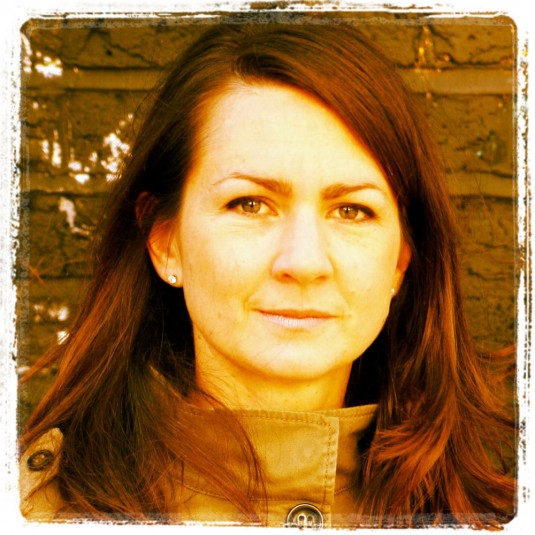
With her first novel, Golden Handcuffs, Polly Courtney turned her back on a “so-called” high-flying career in the City to expose the toxic culture of the industry she worked in.
After this early self-publishing success she won what looked like her dream contract with HarperCollins but quickly found herself part of another corporate machine. Polly very publicly walked out on the deal and has just self-published her latest book, a fictional look at the UK riots in the summer of 2011. And there’s even a movie on the cards.
Q) When did you start writing and why?
It happened by accident. I was working as an investment banker in the city, becoming more and more miserable by the day. I was so disillusioned with my so-called ‘high flying’ career that I felt compelled to write about it so that the world could see the futile work, the hierarchy, the sexism, the greed, narcissism and toxic culture. (This was back in the early 2000s and at that time there was still a perception that banking was an industry that young people should aspire to work in.) Publishers weren’t convinced that readers would want to know about this dark, dirty side, so they suggested I ‘glam it up a bit’. This was the opposite of my goal, so I decided to publish the novel myself. It went on to become one of my best-selling novels, Golden Handcuffs.
It happened by accident. I was working as an investment banker in the city, becoming more and more miserable by the day. I was so disillusioned with my so-called ‘high flying’ career that I felt compelled to write about it so that the world could see the futile work, the hierarchy, the sexism, the greed, narcissism and toxic culture. (This was back in the early 2000s and at that time there was still a perception that banking was an industry that young people should aspire to work in.) Publishers weren’t convinced that readers would want to know about this dark, dirty side, so they suggested I ‘glam it up a bit’. This was the opposite of my goal, so I decided to publish the novel myself. It went on to become one of my best-selling novels, Golden Handcuffs.
Q) Your books are on quite controversial topics – can you tell us a bit about them? And what’s the deal with your (ex) publisher?
I love to expose some kind of injustice in society. My latest novel is written from the perspective of a disenfranchised 15-year-old and set in the build-up to the August riots, covering the various frustrations that led to so many young people taking to the streets in 2011. Poles Apart is about a Polish migrant and the unspoken prejudice she faces in everyday life. Having successfully self-published Golden Handcuffs and Poles Apart, I was thrilled to get a publishing contract with an imprint of HarperCollins. I didn’t realise at the time, but in signing this deal, I was effectively pushing my writing career in a new direction – and not a direction I wanted to go in.
I love to expose some kind of injustice in society. My latest novel is written from the perspective of a disenfranchised 15-year-old and set in the build-up to the August riots, covering the various frustrations that led to so many young people taking to the streets in 2011. Poles Apart is about a Polish migrant and the unspoken prejudice she faces in everyday life. Having successfully self-published Golden Handcuffs and Poles Apart, I was thrilled to get a publishing contract with an imprint of HarperCollins. I didn’t realise at the time, but in signing this deal, I was effectively pushing my writing career in a new direction – and not a direction I wanted to go in.
Q) So what changed?
It felt as though the very thing that made my books different (their ‘social conscience’) was being swept aside as book after book came out like mass market fiction with a ‘chick lit’ title and cover. The final straw was when my fifth novel, a story of a young woman grappling with sexism and ‘lad mag culture’, was given the title It’s a Man’s World and adorned with a trashy cover featuring mainly legs that was cloned from a movie poster. I decided to publicly walk out on my publisher at the book launch and announce my return to self-publishing. When I did, lots of authors got in touch to say ‘me too’!
It felt as though the very thing that made my books different (their ‘social conscience’) was being swept aside as book after book came out like mass market fiction with a ‘chick lit’ title and cover. The final straw was when my fifth novel, a story of a young woman grappling with sexism and ‘lad mag culture’, was given the title It’s a Man’s World and adorned with a trashy cover featuring mainly legs that was cloned from a movie poster. I decided to publicly walk out on my publisher at the book launch and announce my return to self-publishing. When I did, lots of authors got in touch to say ‘me too’!
Q) What project have you done that you are most proud of and why?
Feral Youth, my latest book – partly because it was such a collaborative effort between me and everyone involved, but mainly because of the subject matter. It was a big step for me, writing from the perspective of an angry teenage girl from South London. I was advised against it; people told me I could never make it authentic – but I was determined to try. I think Alesha’s story is an important one that needs to be told.
Feral Youth, my latest book – partly because it was such a collaborative effort between me and everyone involved, but mainly because of the subject matter. It was a big step for me, writing from the perspective of an angry teenage girl from South London. I was advised against it; people told me I could never make it authentic – but I was determined to try. I think Alesha’s story is an important one that needs to be told.
Q) How important is independent thinking and doing and where do you get it from?
The idea of doing something ‘because that’s what everyone does’ makes no sense to me. Everyone wants to earn lots of money. I don’t. Everyone wants a publishing deal. I don’t. Everyone likes to read books that are just like all the other books out there. Really? Well, I don’t.
The idea of doing something ‘because that’s what everyone does’ makes no sense to me. Everyone wants to earn lots of money. I don’t. Everyone wants a publishing deal. I don’t. Everyone likes to read books that are just like all the other books out there. Really? Well, I don’t.
My dad had his own business, which evolved as I was growing up, so perhaps I got my aptitude for taking calculated risks from him. My parents have always instilled in me that the most important thing in life is to be happy and frankly, I’m not happy when I’m just following the herd.
Q) What is the key issue for you right now?
It’s the message I’m trying to put out with Feral Youth: that we need to think harder about young people and the stereotypes we’re shown in the press. They’re not ‘mindless criminals’ and they’re not ‘feral’. They’re people and they’re a product of their experiences – so why don’t we focus on making those experiences good?
It’s the message I’m trying to put out with Feral Youth: that we need to think harder about young people and the stereotypes we’re shown in the press. They’re not ‘mindless criminals’ and they’re not ‘feral’. They’re people and they’re a product of their experiences – so why don’t we focus on making those experiences good?
Q) What’s next?
Feral Youth the movie. Seriously!
Feral Youth the movie. Seriously!
::
Polly Courtney’s Q&A is part of the State of Independence series
State of Independence Pop-up Island | 22-28th July 2013
Unit 17 | Boxpark Shoreditch | 2-4 Bethnal Green Rd | London | E1 6GY
State of Independence Pop-up Island | 22-28th July 2013
Unit 17 | Boxpark Shoreditch | 2-4 Bethnal Green Rd | London | E1 6GY
Subscribe to:
Posts (Atom)